NIHON KOHDEN QI-101P Network Card Pcmcia
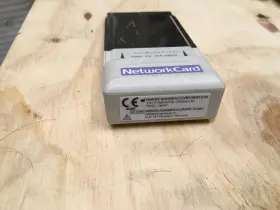
( Brand: Nihon Kohden ), ( Manufacturer Part Number: QI-101P ), ( Part Type: Card ), ( Custom Bundle: No )
Review NIHON KOHDEN Network Card Pcmcia
The Nihon Kohden QI-101P Network Card is a versatile and advanced medical device designed for use in various clinical settings. This PCMCIA (Personal Computer Memory Card International Association) network card is specifically engineered for seamless integration with Nihon Kohden's QinetiQ series of patient monitors, allowing for efficient and reliable data transmission.
The QI-101P Network Card boasts several features that make it a popular choice among healthcare professionals. It supports both wired and wireless LAN connections, ensuring flexibility in patient monitoring setups. The card is also compatible with various network protocols, including TCP/IP and DHCP, making it adaptable to various hospital information systems.
The QI-101P Network Card boasts a compact design, making it easy to install in a wide range of patient monitoring systems. It is also designed to be robust and durable, with a high-quality construction that can withstand the rigors of daily clinical use. The card features a secure data transmission protocol, ensuring that patient data remains confidential and protected at all times.
The QI-101P Network Card comes with user-friendly software that simplifies the installation and configuration process. It also allows for real-time monitoring and trend analysis of patient data, enabling healthcare professionals to make informed decisions and provide optimal patient care. Additionally, the card supports remote monitoring capabilities, allowing for real-time access to patient data from anywhere in the hospital.
In summary, the Nihon Kohden QI-101P Network Card is a powerful and versatile medical device that offers seamless integration with Nihon Kohden's QinetiQ series of patient monitors. Its support for wired and wireless LAN connections, compatibility with various network protocols, compact design, robust construction, secure data transmission, user-friendly software, and remote monitoring capabilities make it an essential tool for healthcare professionals in various clinical settings.
The Nihon Kohden QI-101P Network Card PCMCIA is a data communication device designed for use with Nihon Kohden patient monitors. It enables the transfer of patient data over a network, making it a valuable tool for healthcare institutions seeking to improve patient care and data management. However, like any other technology, it comes with its advantages and disadvantages.
Advantages of Nihon Kohden QI-101P Network Card PCMCIA:1. Enhanced Data Management: The QI-101P Network Card PCMCIA allows for the easy transfer of patient data over a network, making it simpler to manage and access patient information in real-time. This can lead to more efficient patient care and improved patient outcomes.
2. Improved Patient Monitoring: Real-time access to patient data allows healthcare professionals to monitor patient conditions more closely and respond to changes more quickly. This can lead to earlier intervention and better patient outcomes.
3. Compatibility: The QI-101P Network Card PCMCIA is compatible with a range of Nihon Kohden patient monitors, making it a versatile option for healthcare institutions with varying monitoring needs.
4. Remote Monitoring: The network functionality of the QI-101P allows for remote monitoring of patient data, making it an ideal solution for telemedicine applications and remote patient care.
Disadvantages of Nihon Kohden QI-101P Network Card PCMCIA:1. Cost: The QI-101P Network Card PCMCIA may be a significant investment for smaller healthcare institutions or individual healthcare professionals.
2. Complexity: Setting up and configuring the network functionality of the QI-101P may require technical expertise, adding to the cost and complexity of implementation.
3. Security Concerns: Transferring patient data over a network can pose security risks, and healthcare institutions will need to ensure that appropriate security measures are in place to protect sensitive patient information.
Conclusion:The Nihon Kohden QI-101P Network Card PCMCIA offers several advantages, including enhanced data management, improved patient monitoring, compatibility with a range of patient monitors, and remote monitoring capabilities. However, it also comes with some disadvantages, such as cost, complexity, and security concerns. Healthcare institutions and professionals should carefully consider the benefits and drawbacks of the QI-101P Network Card PCMCIA and evaluate whether it aligns with their specific monitoring needs and resources before making a purchase.
Recommendation:If a healthcare institution or professional determines that the benefits of the Nihon Kohden QI-101P Network Card PCMCIA outweigh the disadvantages, it is recommended that they carefully plan and prepare for implementation. This includes assessing the cost-effectiveness, technical requirements, and security measures necessary to ensure a successful and secure deployment of the network functionality of the QI-101P. Additionally, it is recommended that ongoing training and support be provided to healthcare staff to ensure that they are able to effectively use the technology to improve patient care.
Details:
Shipping in the lower 48 states ONLY. Nihon Kohden Network Card PCMCIA QI-101P, Pulled working.
part #: qi101p prices
- $79.99-$151.99
specifications patimonitors:
- brand: Nihon Kohden
- mpn: Qi-101p
- part type: Card
- custom bundle: No
general patimonitors:
- condition: Used
- Healthcare, Lab Dental > Medical Lab Equipment, Devices > Patient Monitors
offer patimonitors:
- options: Ship-to-home
- availability: In Stock
- started: March 6, 2025
- quantity: 4
- sold: 0
returns patimonitors:
- policy: Returns Accepted
- time: 30 Days
- method: Money back
- paid by: Buyer
seller patimonitors:
- city: Saint Louis, Missouri
- rating: 99.5%
- # reviews: 424
payments patimonitors:
- wallet: Google-pay
- other
- credit card: Discover
shipping patimonitors:
- transit: 4-9 Days
- carrier: USPS
- type: Fixed
- service: USPS Ground Advantage
- cost: $7.00
- class: Standard
Nihon Kohden QI-101P Is Similar To:
- Nihon Kohden Eeg-1200 Neurofax Electroencephalograph System (50.5% similar) Included in this package are: - electroencephalograph, EEG 1200 lamp split, LS-703A camera, sync EP520 dell monitor, U2412MC computer workstation, D11S power line conditioner, EEG-1200A transformer, isolation, LS-120 neurotics, JE922A JE921A, please view photos closely. This offer is for a used...(May 16th, 2024)
- Nihon Kohden Ag-920ra Multi Gas Unit (52.6% similar) Includes necessary power cords: no. Current rates are $175 for packing and pelleting each standard pallet standard size is 48 X40 X60 $300 non-standard. Shipping cost is calculated by zip code and available at the...(May 16th, 2024)
- Nihon Kohden Ms210bk Ms-210bk 2-channel Neuropack Localized Signal Recorder Device (44.3% similar) Sold as is with no return right. Shipping handling. Comes as pictured. Please see the pictures for loose/broken parts. Inventory ID:WH2-Z2-S2B, 052024, bar. We acquired the unit in a state surplus sale. Therefore, we couldn't power it up...(May 20th, 2024)
- Nihon Kohden Je-911a Neurofax Amplifier (60.8% similar) Nice used unit...(May 21st, 2024)
- Nihon Kohden Bsm-2351a Patient Monitor (48.7% similar) 1755 enterprise parkway suite 4 twins burg, oh 44087, the and photos represent best efforts to convey information our opinions about a product. Shipping cost is calculated by zip code and available at the top of page. Current rates are $175 for packing and pelleting each...(May 21st, 2024)
- Nihon Kohden Bsm-6501a Patient Monitor (51.3% similar) Shipping cost is calculated by zip code and available at the top of page. Optional notes: scratch on screen overlay. 1755 enterprise parkway suite 4 twins burg, oh 44087, the and photos represent best efforts to convey information our opinions about a product. Current rates are $...(May 21st, 2024)
- Nihon Kohden Bsm-6701a Patient Monitor (51.3% similar) 1755 enterprise parkway suite 4 twins burg, oh 44087, the and photos represent best efforts to convey information our opinions about a product. $350 for packing and pelleting each custom reinforced pallet. Shipping cost is calculated by zip code and available at the top of page...(May 21st, 2024)
- Nihon Kohden Bsm-6301a Life Scope Patient Monitor (44.9% similar) Material: life scope BM-6301A. Current rates are $175 for packing and pelleting each standard pallet standard size is 48 X40 X60 $300 non-standard. $350 for packing and pelleting each custom reinforced pallet. 1755 enterprise parkway suite 4 twins burg, oh 44087, the and...(May 22nd, 2024)
- Nihon Kohden Bsm-5106a Patient Monitor (51.3% similar) 1755 enterprise parkway suite 4 twins burg, oh 44087, the and photos represent best efforts to convey information our opinions about a product. Reline will attempt to replace product prior issuing credit. $350 for packing and pelleting each custom reinforced pallet...(May 22nd, 2024)
- Nihon Kohden Bsm-5136a Bedside Monitor (51.3% similar) Shipping cost is calculated by zip code and available at the top of page. Current rates are $175 for packing and pelleting each standard pallet standard size is 48 X40 X60 $300 non-standard. 1755 enterprise parkway suite 4 twins burg, oh 44087, the and photos represent best...(May 23rd, 2024)
- Nihon Kohden Ay-653p Lifescope Patient Bedside Module (45.2% similar) Reline will attempt to replace product prior issuing credit. Shipping cost is calculated by zip code and available at the top of page. Current rates are $175 for packing and pelleting each standard pallet standard size is 48 X40 X60 $300 non-standard. $350 for packing and pelleting each...(May 24th, 2024)
