DATASCOPE PG23939-E2 Passport Xg Patient Monitor Power Cord
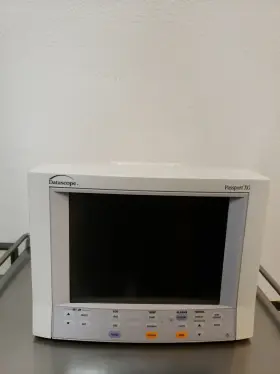
( Brand: Datascope ), ( Manufacturer Part Number: PG23939-E2 ), ( Part Type: Monitor ), ( Unit Type: Unit ), ( Country Of Origin: United States ), ( Intended Use/discipline: Emergency Medicine, Cardiology, Anesthesiology )
Review DATASCOPE Passport Xg Patient Monitor Only Not Power Cord
The Datascope PG23939-E2 Passport XG Patient Monitor Power Cord is a crucial accessory designed specifically for use with the Datascope Passport XG patient monitor. This power cord enables reliable and uninterrupted power supply to the patient monitor, ensuring its optimal performance during patient care.
Measuring approximately 6 feet long, this power cord is of ample length to facilitate easy placement of the patient monitor in various clinical settings. Its heavy-duty construction promises durability and longevity, with the ability to withstand frequent use and potential rough handling in a hospital environment.
The PG23939-E2 power cord features a three-prong plug design that ensures a secure connection to the electrical outlet. The cord's insulation is made from high-quality materials that provide excellent protection against electrical currents, minimizing the risk of electrical shocks. Additionally, the power cord is compliant with stringent safety standards, including UL and FCC regulations, ensuring the safety of both the clinical staff and patients.
The Datascope PG23939-E2 Passport XG Patient Monitor Power Cord is designed to be easily connectable to the monitor, with a simple plug-and-play mechanism. This enables quick setup and deployment of the patient monitor, saving valuable time in clinical settings. The cord's flexibility also allows for easy maneuverability around the bed or patient, ensuring maximum convenience during patient care.
In summary, the Datascope PG23939-E2 Passport XG Patient Monitor Power Cord is an essential accessory for the efficient and effective use of the Passport XG patient monitor. Its durable construction, reliable power transmission, and compliance with safety standards make it a trusted and indispensable component of any clinical setting.
The Datascope PG23939-E2 Passport XG Patient Monitor Power Cord is an essential accessory for users of the Passport XG patient monitor. This power cord allows the monitor to be powered and connected to a patient, enabling the collection and monitoring of vital signs. In this response, we will discuss the pros and cons of purchasing this power cord.
Pros:1. Compatibility: The PG23939-E2 power cord is specifically designed for use with the Datascope Passport XG patient monitor, ensuring a reliable and secure connection.
2. Durability: The power cord is built to withstand frequent use in a hospital or clinical setting, with a reinforced design and robust connectors.
3. Long Reach: The power cord has a longer length than some other patient monitor cords, allowing for greater flexibility in patient placement and positioning.
Cons:1. Cost: The PG23939-E2 power cord is more expensive than some other patient monitor power cords on the market.
2. Single Use: This power cord is not reusable and must be replaced if it becomes damaged or worn out.
3. Limited Flexibility: Although the power cord has a longer reach than some other models, it may still not be long enough for all patient positioning requirements.
In conclusion, the Datascope PG23939-E2 Passport XG Patient Monitor Power Cord offers reliability, durability, and compatibility with the Passport XG patient monitor. However, its high cost and limited flexibility may be drawbacks for some users. Ultimately, the decision to purchase this power cord depends on the specific needs and budget of the user. If the compatibility and durability are top priorities, then this power cord is a worthwhile investment. However, if cost or flexibility are major concerns, other options may be more suitable.
Details:
Ideal for hospitals and medical facilities, the Datascope Passport XG Patient Monitor offers high-quality monitoring capabilities patients in need of intensive care. The Datascope Passport XG Patient Monitor is a sophisticated medical device designed for use in emergency medicine, anesthesiology, and cardiology.
part #: pg23939e2 prices
- $120.00-$800.00
specifications patimonitors:
- brand: Datascope
- mpn: Pg23939-e2
- part type: Monitor
- unit type: Unit
- country of origin: United States
- intended use/discipline: Emergency Medicine, Cardiology, Anesthesiology
seller patimonitors:
- # reviews: 1399
- city: Rancho Cordova, California
- rating: 100.0%
payments patimonitors:
- credit card: Mastercard
- other
- wallet: Google-pay
offer patimonitors:
- best offers: True
- started: November 13, 2025
- availability: In Stock
- options: Ship-to-home
- sold: 0
- quantity: 1
general patimonitors:
- condition: Used
- Healthcare, Lab Dental > Medical Lab Equipment, Devices > Patient Monitors
returns patimonitors:
- paid by: Seller
- time: 30 Days
- method: Money back
- policy: Returns Accepted
shipping patimonitors:
- cost: $0.00
- type: Calculated
- service: FedEx Ground Economy
- carrier: FedEx
- transit: 4-9 Days
- class: Economy
Datascope PG23939-E2 Is Similar To:
- Datascope 998-00-0170-0014a Passport 2 0998-00-0170-0014a Color Patient Monitor 357093 (51.9% similar) Invades 357093 invades. If you return it just because made a mistake or no longer want. Another quality listing from your trusted medical equipment source, dockyard. Comes with everything you see in pictures; except for the stand if pictured; stand not included shipping cost unless specified...(May 13th, 2024)
- Datascope 0998-00-1000-1006a Spectrum Patient Monitor 357104 (50% similar) We remarked new and used equipment from hospitals all our comes directly. Comes with everything you see in pictures; except for the stand if pictured; stand not included shipping cost unless...(May 14th, 2024)
- Datascope 0998-00-0444-l51 Accutorr Plus Patient Monitor With Nibp Hose And Cuff (55.4% similar) The Datascope accoutre plus patient monitor is a reliable and high-quality device that perfect for monitoring patient vital signs. Louis Robbins. It comes with an nib hose and cuff, ensuring that you can take accurate blood pressure readings. With its advanced features, the Datascope accoutre...(May 16th, 2024)
- Datascope 412717 Spectrum Patient Monitor (55% similar) No guarantee of functionality. The equipment has not been calibrated or tested for proper functionality. No cosmetic work done to the unit. The item has been cleaned and...(May 17th, 2024)
- Datascope 412718 Passport 2 Patient Monitor (66.7% similar) No guarantee of functionality. No warranty unless noted in the above. Cosmetic work has been done to the unit. Governors entrepreneur impact award - 2013 , dubious area chamber of commerce member. Condition terminology...(May 17th, 2024)
- Mindray Dpm-3 Datascope Dpm 3 Vital Monitor With Power Cable (51.6% similar) The product has not been tested. It is being sold, as is...(May 19th, 2024)
- Datascope 0998-uc-0444-j71 0998-00-0444-j71 Mindray Accutorr Plus Monitor Only Power Tested (50.3% similar) I choose the fastest of 3 options. In good condition, ethos some scratches from previously use. Model: Datascope 0998-00-0444-J71 min dray accoutre plus monitor only power tested. 160 condition: pre-owned. Shipping, I ship via FedEx, ups...(May 22nd, 2024)
- Datascope 0998-00-0095 Passport Multi-parameter Patient Monitor Untested (62.9% similar) Condition: pre-owned, ethos some scratches from previously use. Shipping, I ship via FedEx, ups and USPS mon-Fri. I choose the fastest of 3 options. Model: Datascope passport 0998-00-0095 multi-parameter patient monitor untested...(May 23rd, 2024)
- Datascope 0014-00-0251-a Passport 2 And Spectrum Power Supply For Li-ion Batteries 0014-00-0251 (44.2% similar) You are purchasing the following item: Datascope passport 2 and spectrum power supply for li-ion batteries 0014-00-0251...(May 23rd, 2024)
- Datascope 0998-00-0170-3016a Passport 2lt Patient Monitor With Leads Nbp Ecg Spo2 Masimo 34333 (55.6% similar) Part #: Datascope 0998-00-0170-3016A for sale...(May 23rd, 2024)
- Mindray 6100f-pa00195 Datascope Passport V With Etc02 Ecg Sp02 Masimo Nibp Temp Ibp (37.1% similar) Our biomedical engineers have over 85 years of combined technical experience and continue to stay up-to-date on the latest technology. Nib hose and adult cuff. Maoism SP02 finger sensor. Gopher medical has earned the reputation as #1 trusted medical dealer in Midwest. In addition...(May 24th, 2024)
