CHANGE HEALTHCARE HCH325 Hemodynamic Monitor
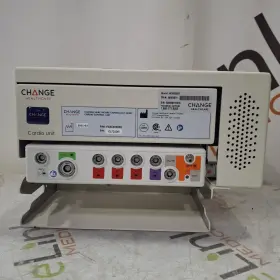
( Brand: Change Healthcare ), ( Manufacturer Part Number: HCH325 ), ( Part Type: Monitor ), ( Serial Number: 2020000137316 )
Review CHANGE HEALTHCARE Hemodynamic Monitor
The HCH-325 Hemodynamic Monitor, manufactured by Healthcare Technology, is a sophisticated and versatile medical device designed to provide real-time, accurate measurements of various hemodynamic parameters. This non-invasive monitor utilizes advanced technology to deliver essential information for effective patient care in various clinical settings, including intensive care units, operating rooms, and emergency departments.
The HCH-325 Hemodynamic Monitor offers a comprehensive range of measurements, including arterial blood pressure, pulse rate, cardiac output, stroke volume, systemic vascular resistance, and total peripheral resistance. These measurements are crucial in assessing a patient's cardiovascular status, particularly in critical situations where timely and accurate information is vital for optimal treatment and patient outcomes.
The device employs state-of-the-art plethysmographic technology to measure blood pressure and volume changes in the peripheral vessels, providing reliable and continuous data without the need for invasive procedures. The monitor also features advanced algorithms to calculate cardiac output and other hemodynamic parameters, ensuring precision and accuracy.
The HCH-325 Hemodynamic Monitor boasts an intuitive and user-friendly interface, allowing healthcare professionals to easily access and interpret the data. The monitor's compact design and portable nature make it a valuable tool for bedside use, enabling clinicians to closely monitor patients in real-time and respond promptly to any changes in their hemodynamic status.
Furthermore, the HCH-325 Hemodynamic Monitor is equipped with various connectivity options, including wireless and wired, enabling seamless integration with other hospital systems and electronic health records. This facilitates efficient data management and sharing, improving overall patient care and communication between healthcare teams.
The device is designed with patient safety in mind, featuring multiple safety mechanisms, such as alarms for low and high blood pressure, irregular heart rhythms, and other potential complications. These alerts help healthcare professionals intervene promptly, reducing the risk of adverse events and improving patient outcomes.
In summary, the HCH-325 Hemodynamic Monitor by Healthcare Technology is a cutting-edge, non-invasive medical device that delivers accurate and real-time measurements of various hemodynamic parameters. Its user-friendly interface, compact design, and advanced features make it an indispensable tool for healthcare professionals in various clinical settings. The monitor's wireless connectivity options facilitate efficient data management and sharing, contributing to improved patient care and communication between healthcare teams.
A hemodynamic monitor, such as the HCH 325, is a medical device used to measure and display various parameters related to a patient's circulatory system. These monitors can provide valuable information to healthcare providers in real-time, aiding in the diagnosis and treatment of various conditions. Here are some potential pros and cons of buying a hemodynamic monitor like the HCH 325:
Pros:1. Enhanced patient care: By continuously monitoring a patient's hemodynamic parameters, healthcare providers can quickly identify any changes in a patient's condition and take appropriate actions to prevent complications.
2. Improved efficiency: Hemodynamic monitors can help streamline workflows by providing real-time information at the bedside, reducing the need for frequent lab tests and consultations.
3. Increased accuracy: Compared to manual measurement techniques, hemodynamic monitors offer more accurate and reliable measurements, reducing the risk of errors and improving patient safety.
4. Multi-parameter monitoring: Hemodynamic monitors can measure multiple parameters simultaneously, including blood pressure, cardiac output, stroke volume, and pulse rate, providing a more comprehensive view of a patient's hemodynamic status.
5. Easy to use: Modern hemodynamic monitors are designed to be user-friendly, with intuitive interfaces and easy-to-understand displays, making them accessible to a wide range of healthcare professionals.
Cons:1. Cost: Hemodynamic monitors can be expensive to purchase and maintain, making them a significant investment for healthcare organizations.
2. Complexity: While hemodynamic monitors are designed to be user-friendly, they can still be complex devices, requiring some level of training to use effectively.
3. Dependence on technology: Hemodynamic monitors rely on electrical signals and sensors to function, making them susceptible to technical issues and malfunctions.
4. Limited mobility: Patients who require continuous hemodynamic monitoring may be limited in their mobility, as the monitor and its associated cables can restrict movement.
5. Invasive monitoring: Some types of hemodynamic monitoring, such as pulmonary artery catheterization, can be invasive and carry risks, such as infection and bleeding.
In conclusion, a hemodynamic monitor like the HCH 325 can offer significant benefits to healthcare providers, including enhanced patient care, improved efficiency, increased accuracy, multi-parameter monitoring, and ease of use. However, these benefits come with some potential drawbacks, including cost, complexity, dependence on technology, limited mobility, and invasiveness. Ultimately, the decision to purchase a hemodynamic monitor should be based on a careful consideration of these factors, as well as the specific needs and resources of the healthcare organization.
Recommendation:Based on the pros and cons outlined above, a hemodynamic monitor like the HCH 325 can be a valuable investment for healthcare organizations that provide critical care services, where continuous monitoring of hemodynamic parameters is essential for patient safety and outcomes. However, it is important to carefully consider the costs, training requirements, and potential risks before making a purchase decision. Healthcare organizations should also evaluate the availability and affordability of alternative monitoring options, such as non-invasive techniques or remote monitoring systems. Ultimately, the decision to purchase a hemodynamic monitor should be based on a thorough evaluation of the specific needs and resources of the organization, as well as the potential benefits and risks to patients.
Details:
Current rates are $175 for packing and pelleting each standard pallet Standard size is 48 x40 x60 $300 non-standard. Inventory Powers On: Unable to Check. Shipping cost is calculated by zip code and available at the top of page. OEM: Change Healthcare.
The and photos represent best efforts to convey information our opinions about a product. $350 for packing and pelleting each custom reinforced pallet. Reline will attempt to replace product prior issuing credit.
part #: hch325 price
- $123.00
specifications patimonitors:
- brand: Change Healthcare
- mpn: Hch325
- part type: Monitor
- serial number: 2020000137316
returns patimonitors:
- paid by: Seller
- time: 30 Days
- method: Money back
- policy: Returns Accepted
seller patimonitors:
- city: Atlanta, Georgia
- # reviews: 12957
- rating: 100.0%
offer patimonitors:
- sold: 0
- options: Ship-to-home
- availability: In Stock
- quantity: 1
- started: August 26, 2025
- best offers: True
general patimonitors:
- Healthcare, Lab Dental > Medical Lab Equipment, Devices > Patient Monitors
- condition: Used
payments patimonitors:
- wallet: Google-pay
- credit card: Discover
- other
shipping patimonitors:
- service: UPS Ground
- cost: $52.20
- type: Calculated
- transit: 3-9 Days
- carrier: UPS
- class: Standard
