MINDRAY 115-006551-00 Sensor Cable O2
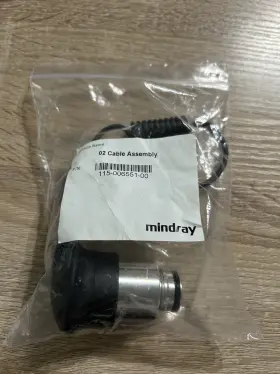
( Brand: Mindray ), ( Manufacturer Part Number: 115-006551-00 ), ( Part Type: Sensor Cable ), ( Country Of Origin: China )
Review MINDRAY O2 Sensor Cable Pn New
The Mindray 115-006551-00 O2 sensor cable is an essential component for medical institutions and laboratories requiring precise oxygen measurement in their analysis processes. This high-quality sensor cable is engineered to provide reliable and accurate readings for oxygen saturation levels in blood samples.
The cable is designed to connect an oxygen sensor module to a blood gas analyzer, enabling the analyzer to measure the oxygen saturation levels in a blood sample. The sensor cable is made of medical-grade materials, ensuring durability and resistance to corrosion, making it suitable for long-term use in a medical environment.
The Mindray O2 sensor cable is equipped with a high-performance, low-noise design that minimizes interference and ensures stable readings. It features a secure connection mechanism that reduces the risk of signal loss or instability, ensuring consistent and accurate measurements.
The cable is compatible with various Mindray blood gas analyzers, including BS-200, BS-300, and BS-500 series. It is easy to install and use, with a plug-and-play design that allows for quick and easy setup.
The O2 sensor cable is compact and lightweight, making it easy to transport and store. It is also sterilizable, making it suitable for use in medical procedures where sterility is critical.
In summary, the Mindray 115-006551-00 O2 sensor cable is a high-performance, reliable, and accurate component designed for use in medical oxygen measurement applications. Its medical-grade materials, low-noise design, and secure connection mechanism make it an essential tool for medical institutions and laboratories seeking precise and consistent oxygen saturation measurements.
Pros and Cons of Buying Mindray 115-006551-00 O2 Sensor Cable
The Mindray 115-006551-00 O2 Sensor Cable is a critical component used in various medical applications, particularly in anesthesia machines. Let's explore the potential advantages and disadvantages of purchasing this specific O2 sensor cable.
Pros:1. High-quality construction: The Mindray O2 sensor cable is designed with high-quality materials, ensuring durability and reliability. This can result in fewer replacement needs over time, ultimately saving costs in the long run.
2. Compatibility: This cable is specifically designed to work with Mindray anesthesia machines, ensuring a seamless integration and eliminating the need for potential adapters or modifications.
3. Easy installation: The O2 sensor cable is easy to install, reducing the time and effort required for maintenance or repairs.
4. Accurate readings: The Mindray O2 sensor cable provides accurate oxygen readings, contributing to the overall safety and effectiveness of the medical equipment.
Cons:1. Cost: The Mindray O2 sensor cable may be more expensive compared to generic or aftermarket alternatives. This can be a significant consideration for facilities or organizations with limited budgets.
2. Availability: Due to its specificity to Mindray anesthesia machines, this O2 sensor cable may not be readily available at all medical supply stores or online retailers, making it slightly more difficult to obtain.
Conclusion:The Mindray 115-006551-00 O2 Sensor Cable offers several advantages, including high-quality construction, compatibility, easy installation, and accurate readings. However, it also comes with potential disadvantages such as cost and availability. Ultimately, the decision to purchase this specific O2 sensor cable depends on your specific needs, budget, and availability. If you prioritize the benefits of a reliable, accurate, and compatible cable, then investing in the Mindray cable may be the best choice for your medical equipment. If cost is a significant concern, you may want to explore alternative options or consider negotiating with suppliers for better pricing.
Details:
Made by the trusted brand Mindray, this O2 cable assembly is manufactured in China to ensure quality and reliability. The Mindray O2 Sensor Cable PN: 115-006551-00 is a new product designed for patient monitoring in healthcare settings.
part #: 11500655100 price
- $119.00
specifications patimonitors:
- brand: Mindray
- mpn: 115-006551-00
- part type: Sensor Cable
- country of origin: China
returns patimonitors:
- policy: No Returns
payments patimonitors:
- other
- credit card: Discover
- wallet: Google-pay
offer patimonitors:
- best offers: True
- availability: In Stock
- sold: 0
- quantity: 3
- started: April 29, 2026
- options: Ship-to-home
general patimonitors:
- condition: New
- Healthcare, Lab Dental > Medical Lab Equipment, Devices > Patient Monitors
seller patimonitors:
- # reviews: 121
- city: New Braunfels, Texas
- rating: 95.2%
shipping patimonitors:
- transit: 3-9 Days
- class: Economy
- carrier: FedEx
- cost: $0.00
- type: Fixed
- service: FedEx Ground Economy
Mindray 115-006551-00 Is Similar To:
- Mindray Dpm-3 Datascope Dpm 3 Vital Monitor With Power Cable (36.2% similar) The product has not been tested. It is being sold, as is...(May 19th, 2024)
- Mindray 040-001235-00 Temperature Adapter Cable Mr 400 Series 2 Pin 19833 (44.1% similar) The item has been cleaned and handled in accordance with the manufacturers instructions. FDA.gov/cadre/divvies/. Item: 1983 3 location: SR10...(May 29th, 2024)
- Mindray 0012-0012-00-1745-01 Ecg Trunk Cable Datascope V12 V21 With 5 Lead 19828 (43.2% similar) FDA.gov/cadre/divvies/. The item has been cleaned and handled in accordance with the manufacturers instructions. Mindray ECG trunk cable data scope V12 V21 0012-0012-00-1745-01 with 5 lead 0012-00-1503-02. Item: 1982 8 location: SR10...(May 29th, 2024)
- Mindray 040-000091-00 Reusable Instrument Cable 400 Series Temperature 19832 (47.9% similar) The item has been cleaned and handled in accordance with the manufacturers instructions. Item: 1983 2 location: SR10. FDA.gov/cadre/divvies/...(May 29th, 2024)
- Mindray 040-000054-00 3 Of Ibp Adapter Cable Edwards Connector Datascope (49.6% similar) 5-PIN d-shaped connector dual keyed passport v v-series. Boomed tested working good condition. 3 sets of; Ibo adapter cable Edwards connector, Mindray data scope 040-000054-00 12FT...(September 11th, 2024)
- Eastshore 6001-wa53000 Rolling Stand For Mindray N15 N17 Emp17 Monitor New Small Wheel (27.5% similar) Mounting plate tilt and height adjustment for optimal view angle. Minimum height : 80CM 31.5 maximum 125CM 49.5 slide-in aluminum mounting plate can be used with various bottom mounted medical devices. Cable hook for cable management. Rolling stand for Mindray N15 N17 EMP17 monitor new small...(January 8th, 2025)
- Mindray 121-002174-00 Vs9 Vital Signs Monitor Nibp Pulse Rate Mfr 121-002174-00 New Without Box (40% similar) Quick connect nib tubing. Up for sale is a brand new without original box Mindray VS9 vital signs monitor with 10 color touch display built-in printer parameters: blood pressure and pulse rate, unit comes with; adult cuff. Comes with 2 years warranty through Mindray na Mindray VS9 vital signs...(January 23rd, 2025)
- Mindray 009-002944-00-2.0 Iabp analog Output Cable For Beneview T1 15ft (46.6% similar) Applicable the manufacture or your personal/medical care/health care provider. By purchasing an item you agree to the following: we. Wearing of an item if applicable, maintenance/...(January 29th, 2025)
- Mindray 04000102900 Ibp Cable Dual Connection (53.3% similar) Part #: Mindray 04000102900 for sale...(February 6th, 2025)
- Rh E710-480 For Mindray B View T5 T8 Adapter Cable 10ft (35.6% similar) Item has been cleaned and handled in accordance with the manufacturers instructions. It would be highly recommended and wise to have a bio-med completely check the product for its performance safety parameters before actual use patient care and/or diagnosis. If you return it just because made a...(March 31st, 2025)
- Mindray 121-001586-00 New Co2 Module (39.5% similar) Stable performance in various clinical environments. Designed for accurate end-tidal co etc monitoring, it seamlessly integrates with compatible Mindray patient monitors, such as the DPM6 and DPM7 series. This Mindray CO2 module is a used unit in perfect working condition. Condition: new...(April 22nd, 2025)
